

Big 4 Interview Questions You Must Prepare
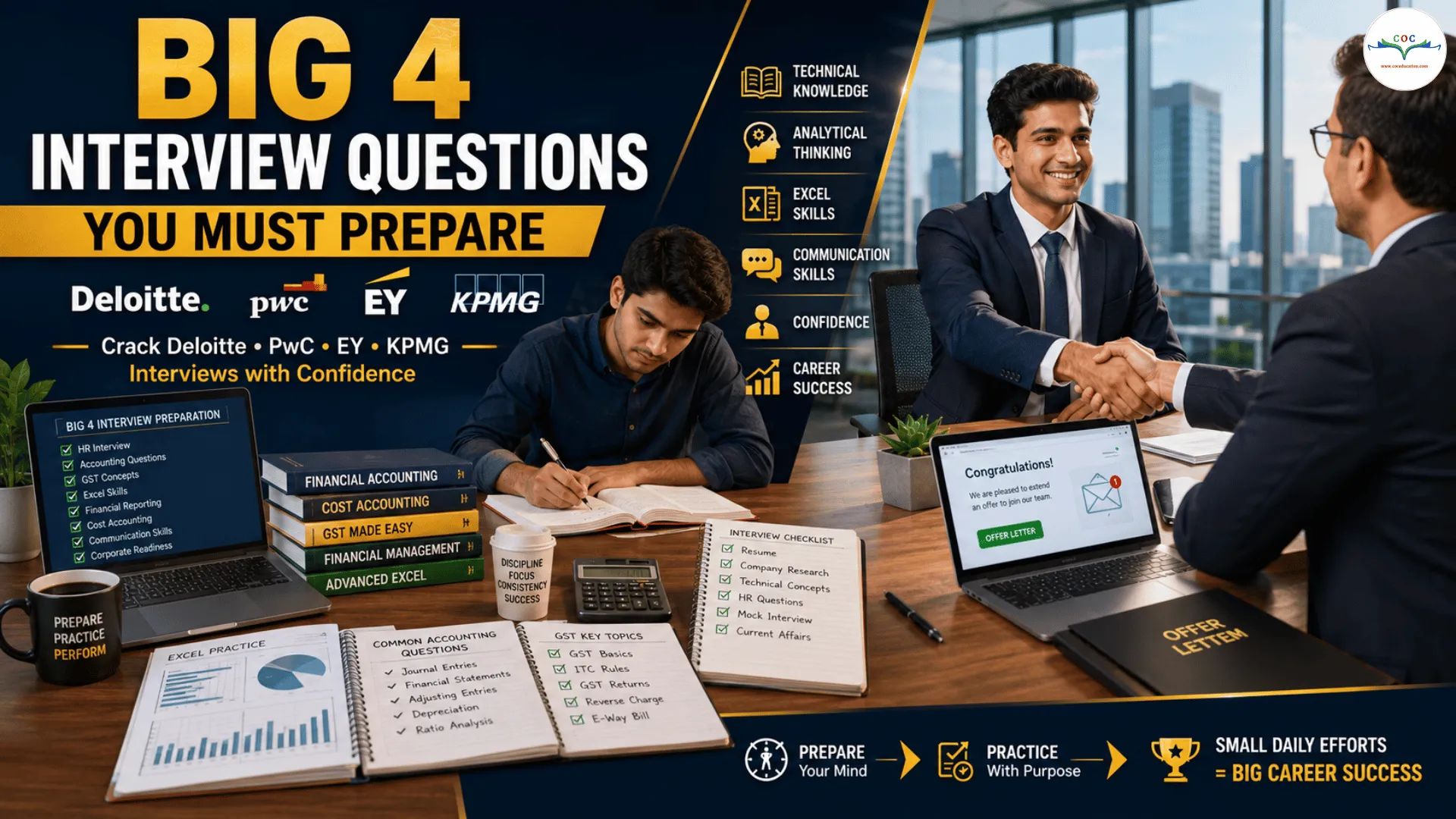
Big 4 Interview Questions You Must Prepare
Introduction
Getting placed in one of the Big 4 firms—Deloitte, PwC, EY, or KPMG—is a dream for many CMA, CA, B.Com, M.Com, and commerce students. These firms offer excellent career growth, global exposure, attractive salaries, and opportunities to work with leading businesses.
However, cracking a Big 4 interview requires more than academic knowledge. Recruiters look for candidates with strong technical expertise, communication skills, confidence, and problem-solving abilities.
In this blog, we'll cover the most common Big 4 interview questions and how you can prepare to impress recruiters and secure your dream job.
Why Big 4 Interviews Are Different
Unlike regular interviews, Big 4 firms evaluate candidates on multiple parameters:
Technical accounting and finance knowledge
Communication skills
Analytical thinking
Problem-solving ability
Professional attitude
Teamwork and adaptability
Confidence under pressure
Preparing for these areas significantly increases your chances of getting selected.
1. Tell Me About Yourself
This is usually the first question in almost every interview.
Your answer should include:
Your educational background
CMA/CA qualification or current level
Key technical skills
Internship or project experience
Career goals
Example
"I'm currently pursuing CMA Intermediate and have completed my B.Com. During my studies, I've developed strong knowledge in accounting, costing, GST, and financial analysis. I've also improved my Excel and Tally skills and am looking forward to contributing to a professional organization where I can continue learning and growing."
Tip: Keep your answer within 60–90 seconds.
2. Why Do You Want to Join the Big 4?
Interviewers want to understand your motivation.
Mention factors like:
Learning opportunities
Global exposure
Professional development
Diverse client experience
Long-term career growth
Avoid saying:
"Because of salary."
"It's a famous company."
3. What Are Your Strengths?
Choose strengths that are relevant to finance and accounting.
Examples:
Analytical thinking
Attention to detail
Time management
Problem-solving
Quick learning
Teamwork
Communication skills
Support each strength with a real example.
4. What Is Your Biggest Weakness?
Choose a genuine but manageable weakness.
Example:
"Earlier, I hesitated while speaking in public. To improve, I've started participating in presentations and group discussions, which has significantly increased my confidence."
Always explain how you're working to improve.
5. Explain Your Internship or Project
Be prepared to discuss:
Your responsibilities
Tools you used
Challenges you faced
What you learned
Results achieved
Interviewers value practical exposure.
6. Technical Accounting Questions
Common topics include:
Journal Entries
Trial Balance
Depreciation
Financial Statements
Accounting Standards
Cost Accounting
Budgeting
Ratio Analysis
Revise your fundamentals thoroughly.
7. GST Interview Questions
Popular questions include:
What is GST?
Difference between CGST, SGST, and IGST
What is Input Tax Credit (ITC)?
GST Return Filing Process
Reverse Charge Mechanism
GST Reconciliation
Strong GST knowledge is highly valued in finance roles.
8. Costing Questions for CMA Students
If you're a CMA student, expect questions like:
Difference between Cost Accounting and Financial Accounting
Standard Costing
Marginal Costing
Budgetary Control
Variance Analysis
Cost Sheet Preparation
Break-even Analysis
Understand both concepts and practical applications.
9. Excel Interview Questions
Excel is one of the most important skills for finance professionals.
You may be asked about:
VLOOKUP/XLOOKUP
Pivot Tables
IF Functions
SUMIF and COUNTIF
Conditional Formatting
Charts and Dashboards
Data Validation
Practical demonstrations may also be part of the interview.
10. Situational Questions
Interviewers assess your decision-making skills.
Examples:
How would you handle a tight deadline?
What would you do if you made an accounting error?
How would you deal with conflicting priorities?
What if your manager gave you an urgent assignment?
Answer using the STAR method:
Situation
Task
Action
Result
11. Teamwork Questions
Examples include:
Describe a time you worked in a team.
How do you handle disagreements?
What role do you usually take in group projects?
Employers value collaboration and communication.
12. Current Affairs in Finance
Stay updated with topics such as:
Budget announcements
GST updates
RBI policies
Inflation
Taxation changes
Corporate finance news
Indian economy
Reading financial news regularly can help you answer confidently.
13. Why Should We Hire You?
This is your opportunity to summarize your value.
Highlight:
Strong academic foundation
Technical skills
Quick learning ability
Positive attitude
Adaptability
Passion for finance
Keep your answer concise and confident.
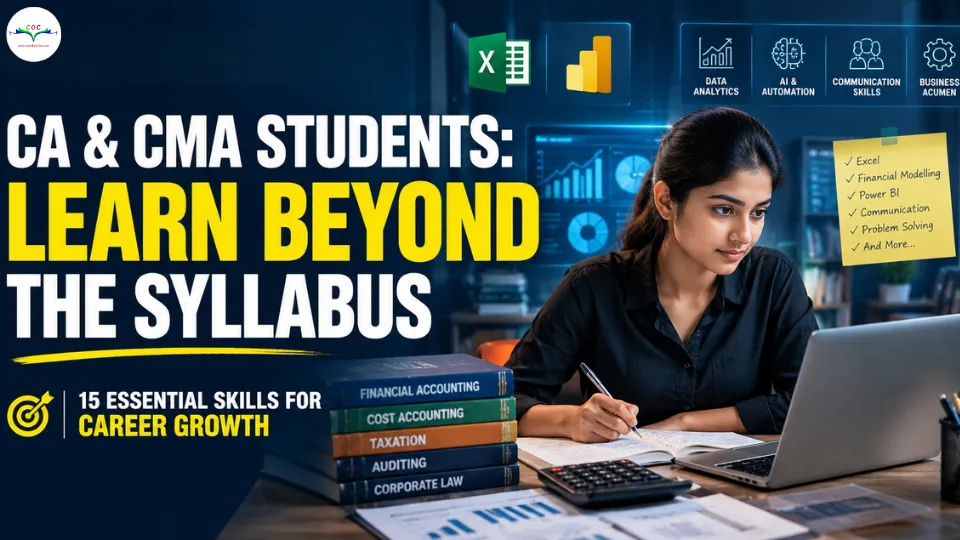
Skills That Can Give You an Edge
Apart from academics, recruiters prefer candidates with practical skills such as:
Microsoft Excel
Power BI
Financial Modeling
TallyPrime
SAP FICO
AI productivity tools
Business communication
Presentation skills
These skills make you job-ready from day one.
Common Interview Mistakes to Avoid
Avoid these mistakes during your interview:
Arriving late
Poor communication
Lack of company research
Weak technical preparation
Giving memorized answers
Not asking questions at the end
Poor body language
Lack of confidence
Professionalism creates a lasting impression.
How to Prepare Effectively
Follow these steps:
Revise accounting and finance basics.
Practice HR interview questions.
Improve Excel and technical skills.
Conduct mock interviews.
Read finance news daily.
Prepare your resume thoroughly.
Research the company before the interview.
Practice speaking confidently.
Consistent preparation builds confidence.
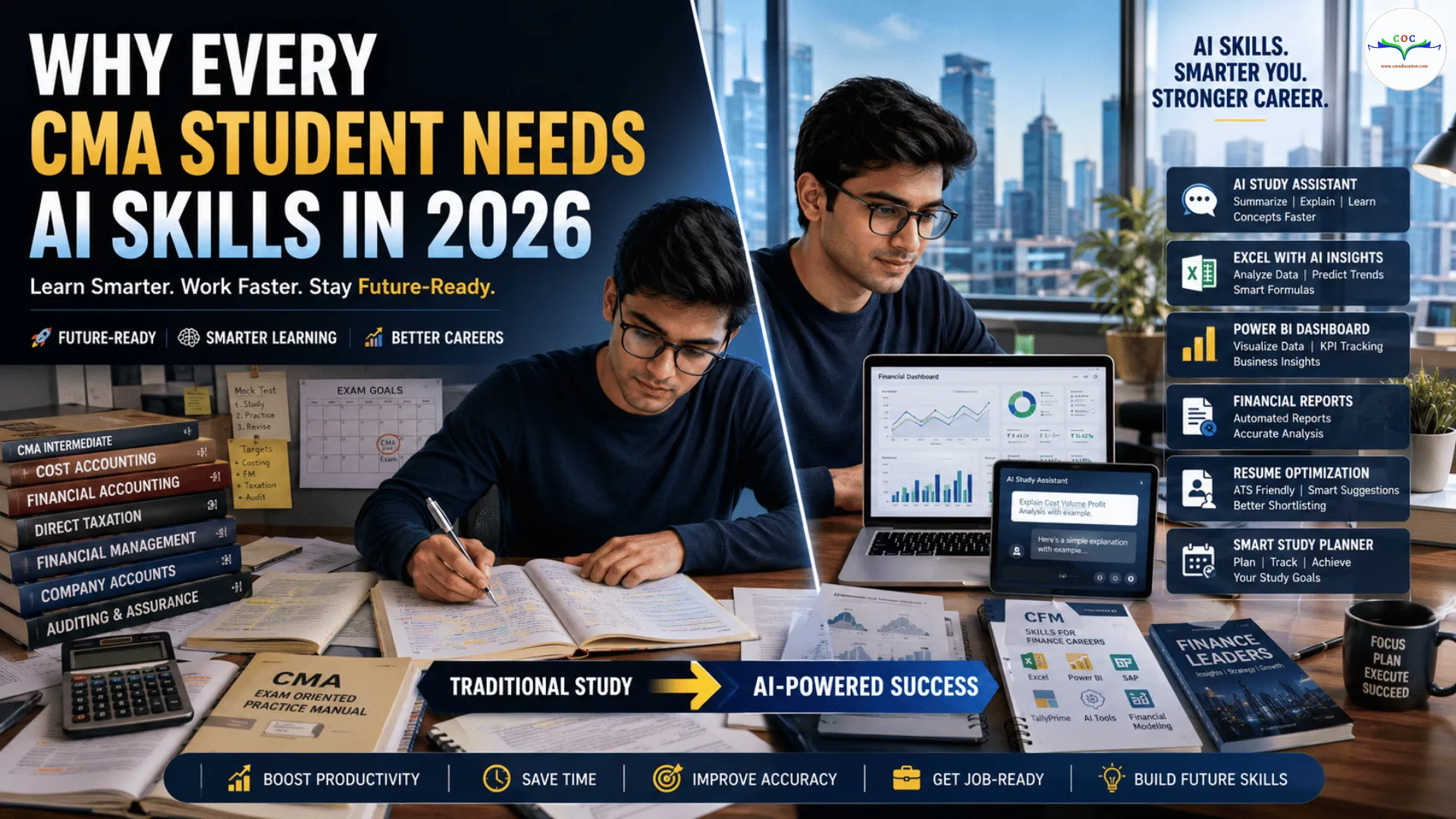
Boost Your Career with CFM by COC Education
Preparing for Big 4 interviews isn't just about clearing exams—it's about developing practical, industry-ready skills.
The Certified Financial Management (CFM) program by COC Education is designed to help students bridge the gap between classroom learning and corporate expectations.
Through CFM, you can gain hands-on training in:
Advanced Microsoft Excel
SAP FICO
TallyPrime
Power BI
Financial Modeling
MIS Reporting
AI Tools for Finance
Interview Preparation
Resume Building
Corporate Communication
These practical skills enhance your employability and help you stand out during Big 4 placements and interviews.
Conclusion
Getting selected by a Big 4 firm requires a combination of technical knowledge, practical skills, confidence, and preparation. Start preparing early, strengthen your finance fundamentals, improve your communication skills, and gain practical exposure through industry-focused tools and certifications.
Remember, interviews don't just test what you know—they evaluate how well you can apply your knowledge in real-world business situations.