

No Excel = No Confidence in Corporate Jobs
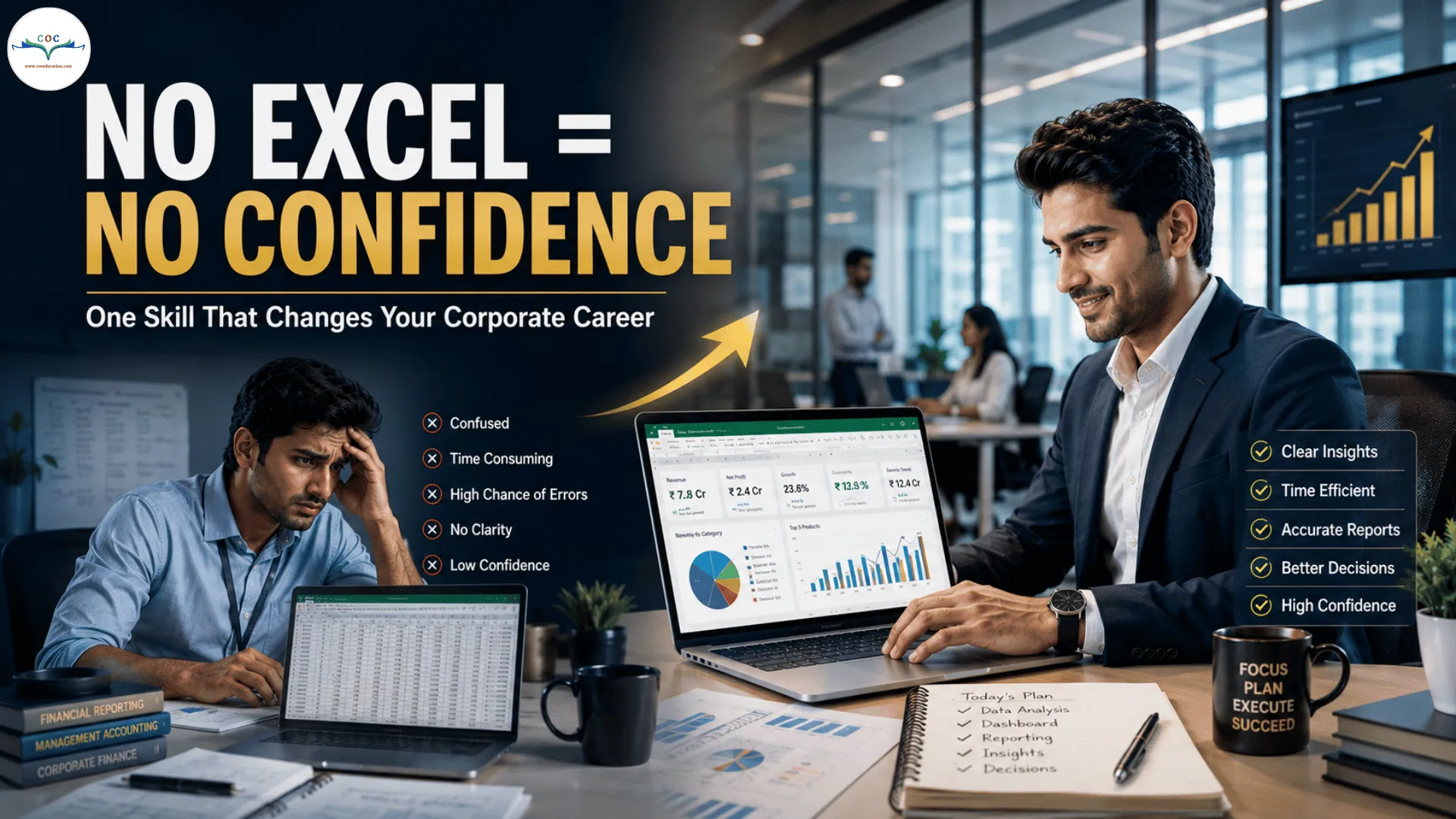
No Excel = No Confidence in Corporate Jobs
Why One Skill Still Decides How Comfortable You Feel at Work
Imagine stepping into your first corporate job with a degree, strong communication skills, and plenty of enthusiasm. You're excited to begin your professional journey and eager to prove yourself.
Then, on your second day, your manager asks:
"Can you prepare an Excel report and share the analysis by the end of the day?"
Suddenly, your confidence starts to fade.
Not because you're not capable.
Not because you're not hardworking.
But because you're not comfortable using Excel.
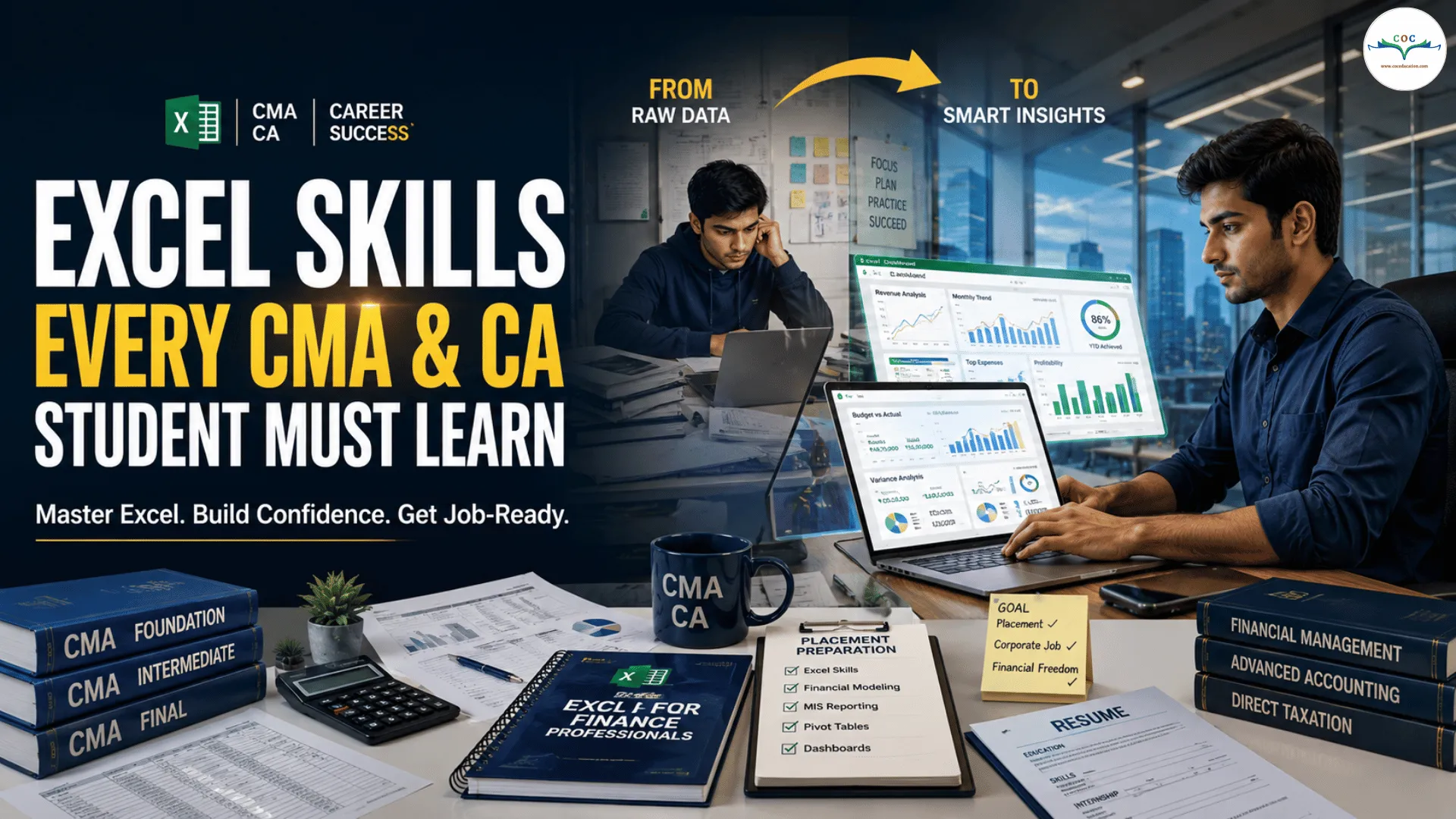
In today's corporate world, Excel is much more than a spreadsheet application. It has become a fundamental business tool used across departments and industries. Professionals who are comfortable with Excel often work more efficiently, communicate insights better, and feel more confident in their daily responsibilities.
Why Excel Skills Directly Impact Workplace Confidence
Workplace confidence comes from knowing that you can complete tasks independently and accurately.
When employees know how to organize data, create reports, analyze information, and present findings using Excel, they feel prepared and in control. They can contribute effectively in meetings, handle assignments with confidence, and take ownership of their work.
On the other hand, employees who struggle with Excel often find themselves constantly seeking help for routine tasks. Over time, this dependence can affect both productivity and self-confidence.
Common Situations Where Professionals Lose Confidence
Struggling to prepare reports during meetings
Taking hours to complete tasks that should take minutes
Feeling uncomfortable when asked to analyze data
Avoiding projects that involve reporting and dashboards
Depending on colleagues for basic spreadsheet functions
These situations can reduce visibility, limit growth opportunities, and create unnecessary workplace stress.
Excel Is Used in Almost Every Corporate Role
One of the biggest misconceptions among students and freshers is that Excel is only important for finance professionals.
The reality is quite different.
Today, Excel is a core business tool used across nearly every department.
Finance & Accounting
Finance teams rely on Excel for:
Budgeting
Financial reporting
Expense tracking
GST and tax calculations
Reconciliation processes
Human Resources
HR professionals use Excel for:
Employee databases
Attendance tracking
Payroll management
Performance analysis
Recruitment reports
Sales & Marketing
Sales and marketing teams use Excel to:
Track leads
Analyze campaigns
Manage customer data
Forecast sales performance
Generate business reports
Operations & Administration
Operations teams use Excel for:
Inventory management
Project tracking
Resource planning
Process monitoring
Operational reporting
Regardless of your role, chances are high that Excel will become a part of your daily work.
The Hidden Cost of Not Knowing Excel
The biggest cost of poor Excel skills isn't lower productivity.
It's reduced confidence.
Professionals who lack Excel proficiency often:
Hesitate before taking on new responsibilities
Feel nervous during meetings and reviews
Avoid analytical tasks
Miss opportunities to demonstrate their capabilities
Depend heavily on others for routine work
Over time, these challenges can impact both performance and career progression.
Excel Skills That Instantly Improve Your Confidence
The good news is that you don't need to master advanced Excel overnight.
Learning a few core skills can significantly improve your efficiency and workplace confidence.
Essential Excel Skills Every Professional Should Learn
Data Organization
Sorting and Filtering
Data Validation
Remove Duplicates
Formulas & Functions
IF Functions
SUMIF and COUNTIF
VLOOKUP
XLOOKUP
Reporting & Analysis
Charts and Graphs
Dashboards
Basic Data Analysis
These tools can help you complete tasks faster, reduce errors, and create professional reports that impress managers and clients.
Confidence Comes From Competence
Many people believe confidence is something you're born with.
In reality, confidence is often built through competence.
When you understand how to manage data, create reports, and solve business problems using Excel, you naturally become more confident in:
Team meetings
Presentations
Client discussions
Project reviews
Daily decision-making
Excel doesn't just make you faster.
It helps you become a more capable and dependable professional.
Why Students Should Learn Excel Before Starting Their Careers
Most academic programs focus heavily on theoretical knowledge. However, employers often look for practical skills that can be applied immediately in the workplace.
Students who learn Excel before entering the job market gain several advantages:
Better internship performance
Faster adaptation to corporate environments
Improved employability
Greater workplace confidence
Stronger professional credibility
Learning Excel early can help bridge the gap between classroom education and real-world business requirements.
Final Thoughts
A degree may help you get shortlisted.
Communication skills may help you clear the interview.
But practical skills help you succeed after getting the job.
In a business environment where data drives decisions, Excel remains one of the most valuable and widely used professional skills.
The difference between confidence and confusion at work is often not intelligence or talent—it's preparation.
And sometimes, that preparation starts with learning Excel.