

Top Finance Skills in Demand in 2026
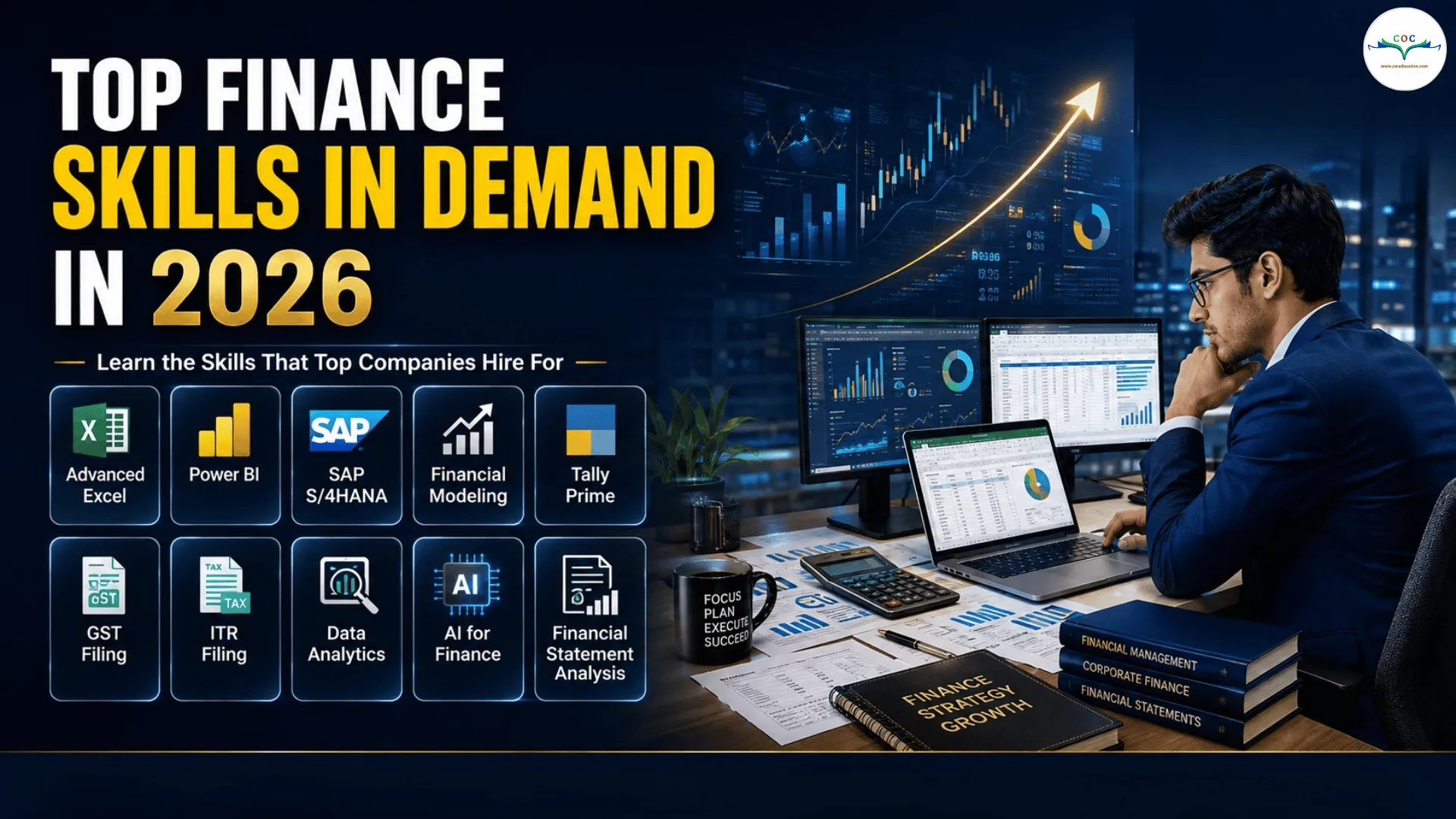
The finance industry is evolving faster than ever. Companies no longer hire candidates based only on academic qualifications—they seek professionals with practical, job-ready skills who can contribute from day one.
Whether you're pursuing CA, CMA, B.Com, M.Com, BBA, MBA, or any commerce degree, mastering the right finance skills can significantly improve your career prospects and earning potential.
In this guide, we'll explore the most in-demand finance skills in 2026 and explain why they matter.
Why Finance Skills Matter More Than Degrees
Today's employers expect candidates to:
- Work confidently with accounting software
- Analyze financial data
- Prepare business reports
- File GST and Income Tax Returns
- Build financial models
- Present insights using dashboards
Having only theoretical knowledge is no longer enough. Practical skills make you stand out during interviews and accelerate your career growth.
1. Advanced Excel
Excel remains the backbone of the finance industry.
Nearly every finance professional uses Excel daily for:
- Financial reporting
- Budgeting
- Data analysis
- Reconciliation
- MIS Reporting
- Forecasting
Must-Know Excel Functions
- XLOOKUP
- INDEX + MATCH
- Pivot Tables
- Power Query
- Conditional Formatting
- SUMIFS
- IFERROR
- TEXT Functions
- Financial Functions
Career Roles
- Accountant
- Financial Analyst
- MIS Executive
- Audit Associate
2. Financial Modeling
Financial Modeling is among the highest-paying finance skills.
It involves creating financial models to evaluate companies, projects, investments, and business performance.
You'll Learn
- Revenue Forecasting
- Cost Projections
- Profitability Analysis
- Valuation
- Scenario Analysis
Used By
- Investment Banks
- Consulting Firms
- Startups
- Big 4 Firms
3. Power BI
Data-driven decision-making is transforming finance.
Power BI enables professionals to create interactive dashboards and automate reporting.
Why Companies Prefer Power BI
- Real-time dashboards
- Automated reports
- Business insights
- KPI tracking
- Interactive visualization
Power BI professionals are increasingly in demand across industries.
4. SAP S/4HANA (SAP FICO)
SAP is one of the world's leading Enterprise Resource Planning (ERP) systems.
Large organizations rely on SAP to manage:
- Accounting
- Finance
- Procurement
- Inventory
- Business Operations
Career Opportunities
- SAP FICO Consultant
- Finance Executive
- ERP Analyst
- Implementation Consultant
5. Tally Prime
Despite the growth of ERP systems, Tally remains widely used by:
- SMEs
- CA Firms
- Accountants
- Tax Consultants
- Manufacturers
Key Skills
- Accounting Entries
- GST
- Inventory Management
- Payroll
- Banking
- Financial Statements
Tally expertise is often a basic requirement for entry-level accounting roles.
6. GST Return Filing
Every business registered under GST needs professionals who understand tax compliance.
Learning GST helps you:
- Prepare GST Returns
- Generate E-Invoices
- Manage Input Tax Credit
- Handle GST Reconciliation
- Ensure Compliance
This skill is highly valuable for accountants and tax professionals.
7. Income Tax Return (ITR) Filing
Taxation professionals are in demand throughout the year, especially during filing season.
Learn To
- File Individual ITRs
- File Business Returns
- Calculate Tax Liability
- Understand Deductions
- Manage Tax Compliance
ITR filing is a valuable freelance and full-time skill.
8. Accounting Software (Zoho Books & Busy)
Cloud accounting software is becoming increasingly popular.
Popular platforms include:
- Zoho Books
- Busy Accounting
- QuickBooks (International)
- Tally Prime
Businesses seek professionals who can work across multiple accounting systems.
9. Data Analytics for Finance
Finance is becoming increasingly data-driven.
Professionals who can analyze financial data are highly valued.
Learn
- Data Cleaning
- Trend Analysis
- Dashboard Creation
- KPI Monitoring
- Business Intelligence
Combining Excel with Power BI creates a strong foundation in finance analytics.
10. Financial Statement Analysis
Every finance professional should know how to interpret:
- Balance Sheet
- Profit & Loss Statement
- Cash Flow Statement
Key Skills
- Ratio Analysis
- Profitability Analysis
- Liquidity Analysis
- Working Capital Analysis
- Cost Analysis
These skills support informed business decision-making.
11. Corporate Communication Skills
Technical expertise alone isn't enough.
Employers value candidates who can:
- Write professional emails
- Present financial reports
- Communicate with clients
- Participate confidently in meetings
Strong communication skills often lead to faster career progression.
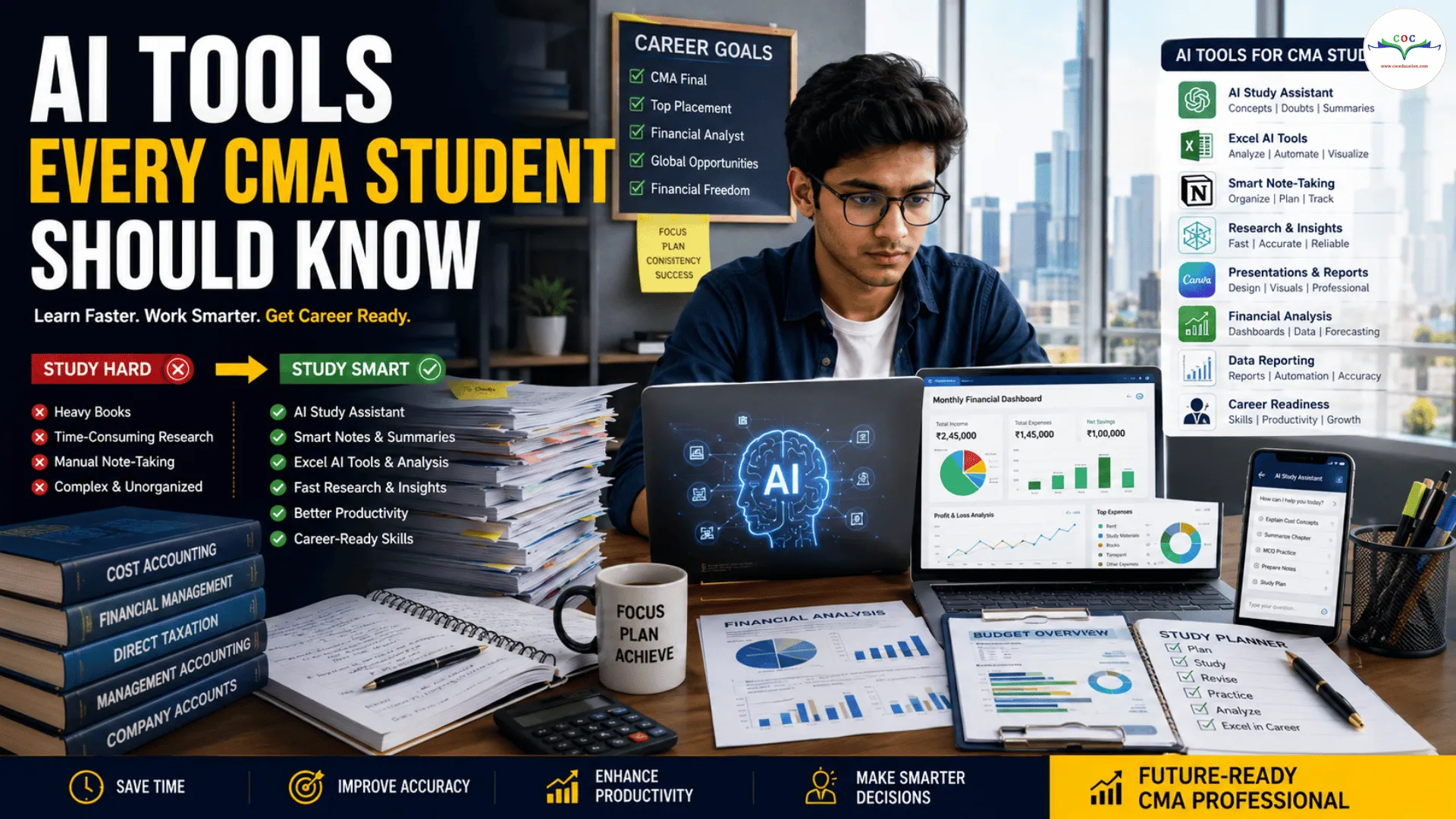
12. AI Tools for Finance
Artificial Intelligence is reshaping the finance profession.
Modern finance professionals use AI tools to:
- Automate repetitive tasks
- Summarize financial reports
- Analyze large datasets
- Generate Excel formulas
- Draft professional emails
Understanding AI enhances productivity and efficiency.
Who Should Learn These Skills?
These skills are ideal for:
- CA Students
- CMA Students
- B.Com Stud
- M.Com Students
- BBA Students
- MBA Students
- Commerce Graduates
- Freshers
- Job Seekers
- Working Professionals
How to Become Job-Ready in Finance
Follow this roadmap:
- Build a strong accounting foundation.
- Master Advanced Excel.
- Learn Tally Prime.
- Understand GST and Income Tax Filing.
- Gain proficiency in SAP S/4HANA.
- Develop Financial Modeling skills.
- Learn Power BI and Data Analytics.
- Improve communication and interview skills.
- Create real-world finance projects.
- Stay updated with AI tools and industry trends.
Final Thoughts
The finance industry in 2026 rewards professionals who combine theoretical knowledge with practical expertise. Whether your goal is to secure a role in a multinational company, join a Big 4 firm, work in a startup, or become a finance consultant, investing in these in-demand skills will significantly enhance your career prospects.
Start with foundational tools like Advanced Excel and Tally Prime, then progress to GST, Income Tax Filing, Financial Modeling, Power BI, and SAP S/4HANA. Alongside technical expertise, focus on communication and analytical skills to become a well-rounded finance professional.
By continuously upgrading your knowledge and gaining hands-on experience, you'll be well-positioned to succeed in the competitive finance job market of 2026 and beyond.