

10 Skills Every Commerce Student Should Learn Before Graduation
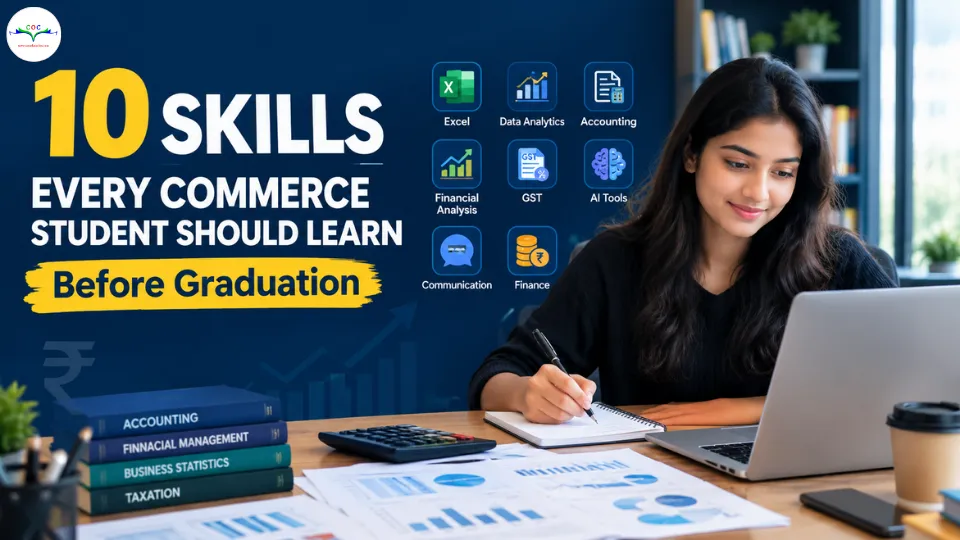
10 Skills Every Commerce Student Should Learn Before Graduation
A commerce degree provides a strong foundation in accounting, finance, economics, and business. But in today’s competitive job market, academic knowledge alone may not be enough.
Commerce students should also develop practical, technical, and professional skills that can help them become more job-ready before graduation.
Here are 10 important skills every commerce student should learn before graduating.
1. Advanced Excel
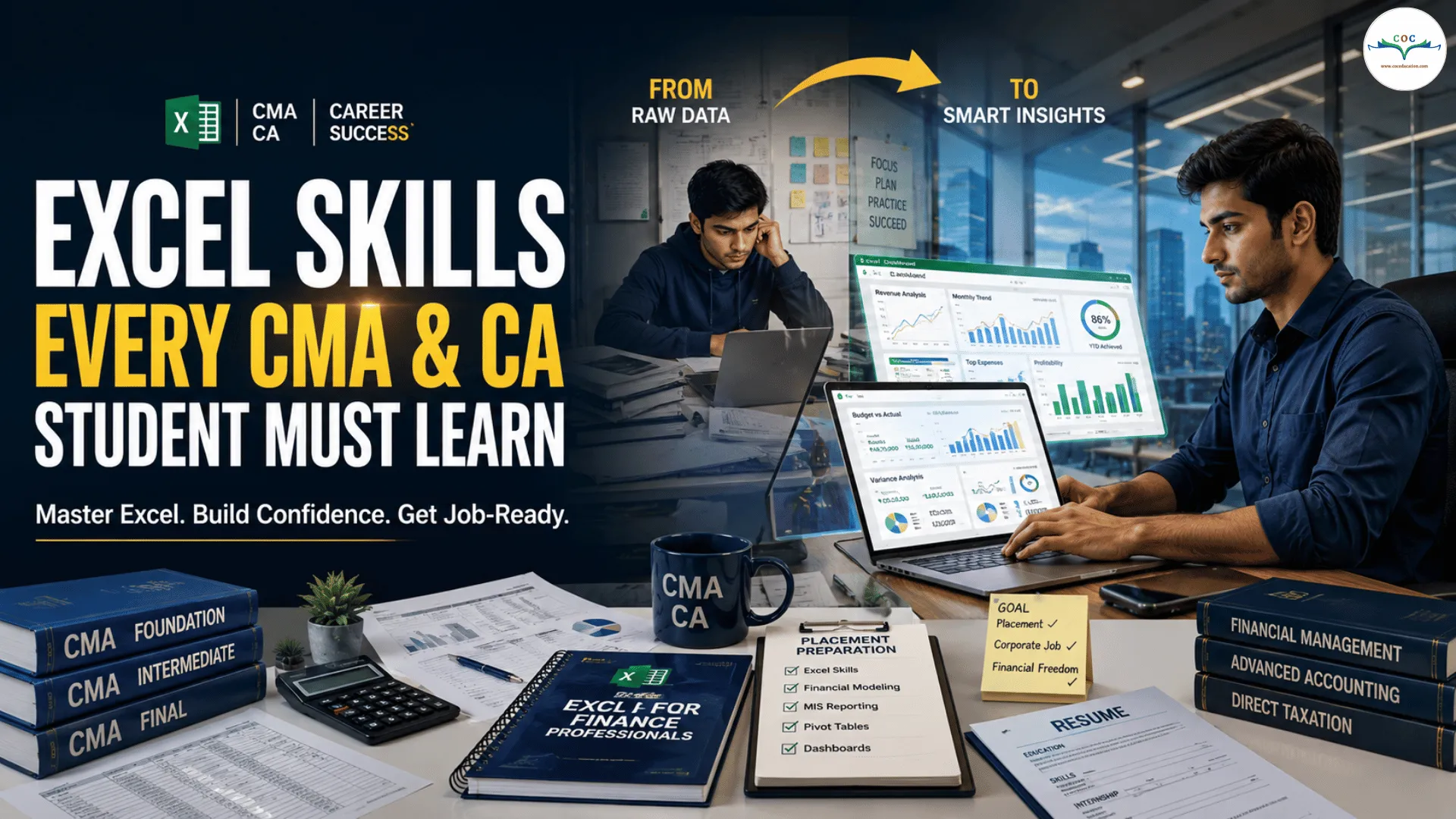
Excel is one of the most widely used tools in accounting, finance, and business.
Students should learn Excel formulas, Pivot Tables, XLOOKUP, data analysis, charts, and dashboards. Strong Excel skills can be useful for accounting, financial reporting, MIS, and business analysis.
2. Financial Analysis
Understanding financial statements is an essential skill for commerce students.
Learn how to analyze Balance Sheets, Profit & Loss Statements, Cash Flow Statements, financial ratios, profitability, and business performance.
Financial analysis helps students understand how businesses actually perform.
3. Accounting Software
Modern accounting is increasingly digital. Students should gain practical exposure to accounting software such as Tally, along with basic knowledge of invoicing, GST accounting, ledgers, and bank reconciliation.
Practical accounting software skills can be valuable for entry-level accounting and finance roles.
4. Data Analytics
Data analytics is becoming important across different business functions.
Commerce students can start with Excel, Power BI, data visualization, basic statistics, and data interpretation. These skills can help students turn business data into useful insights.
5. Business Communication
Good communication is important in almost every career.
Students should improve their professional email writing, presentation skills, report writing, business vocabulary, and verbal communication.
Being able to explain financial or business information clearly can make a significant difference in the workplace.
6. Financial Modelling
Students interested in finance should consider learning the basics of financial modelling.
This includes creating revenue forecasts, expense projections, profit estimates, cash-flow models, and scenario analysis using spreadsheets.
It helps students understand how financial decisions can affect a business.
7. Taxation and GST
Basic taxation knowledge can be extremely useful for commerce students.
Students should understand the fundamentals of GST, income tax, TDS, tax invoices, input tax credit, and basic tax compliance.
This knowledge can be useful for careers in accounting, taxation, and finance.
8. Business and Financial Awareness
Don't limit your learning to textbooks.
Follow business news, financial markets, banking, taxation updates, startups, economic trends, and corporate developments.
Regularly following business news can help students connect their academic concepts with real-world situations.
9. Problem-Solving and Critical Thinking
Employers value professionals who can identify problems and think of practical solutions.
Commerce students should develop analytical thinking, decision-making, logical reasoning, and problem-solving skills.
Try solving real business case studies to understand how financial and business concepts are applied.
10. AI and Digital Skills
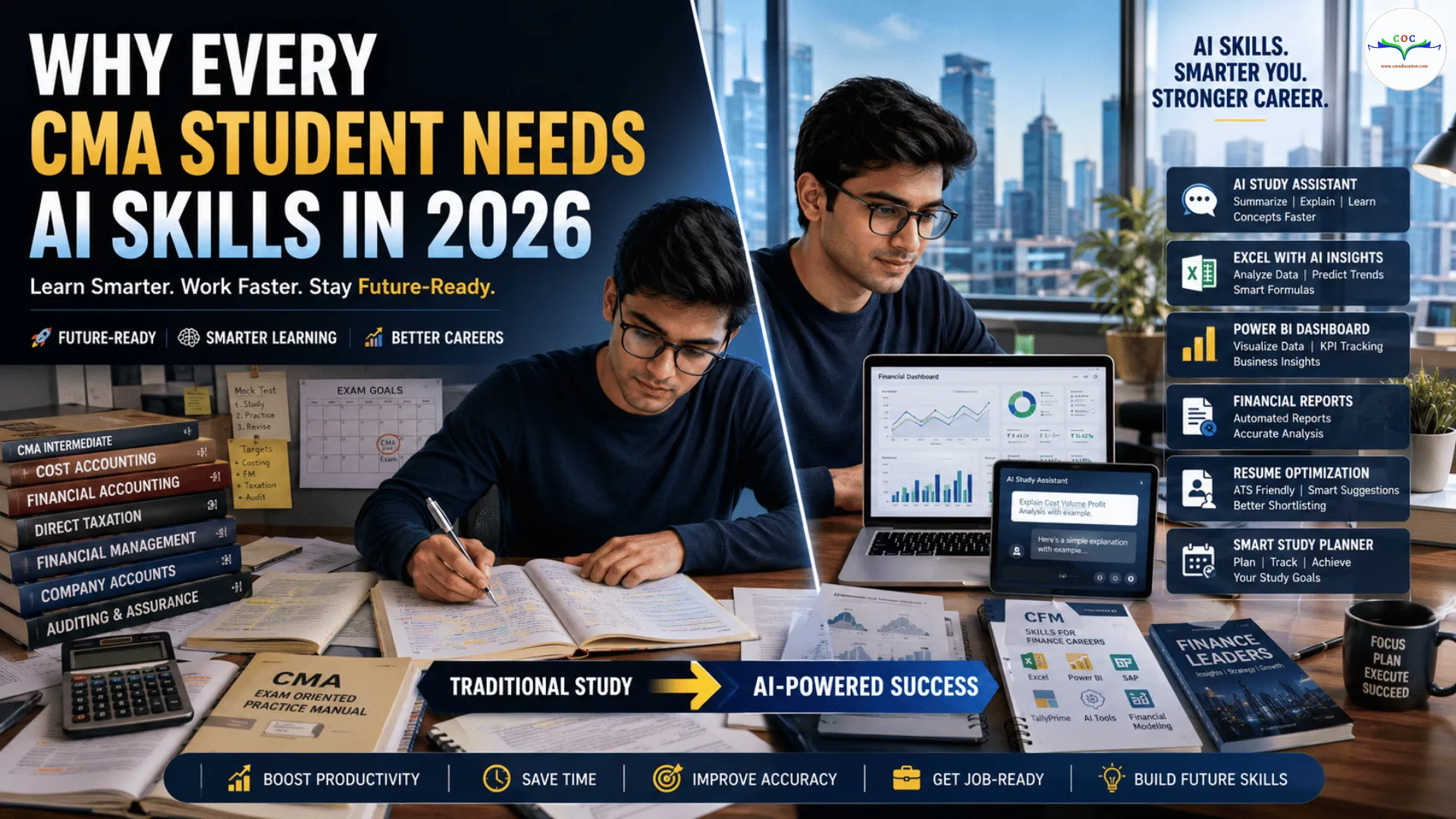
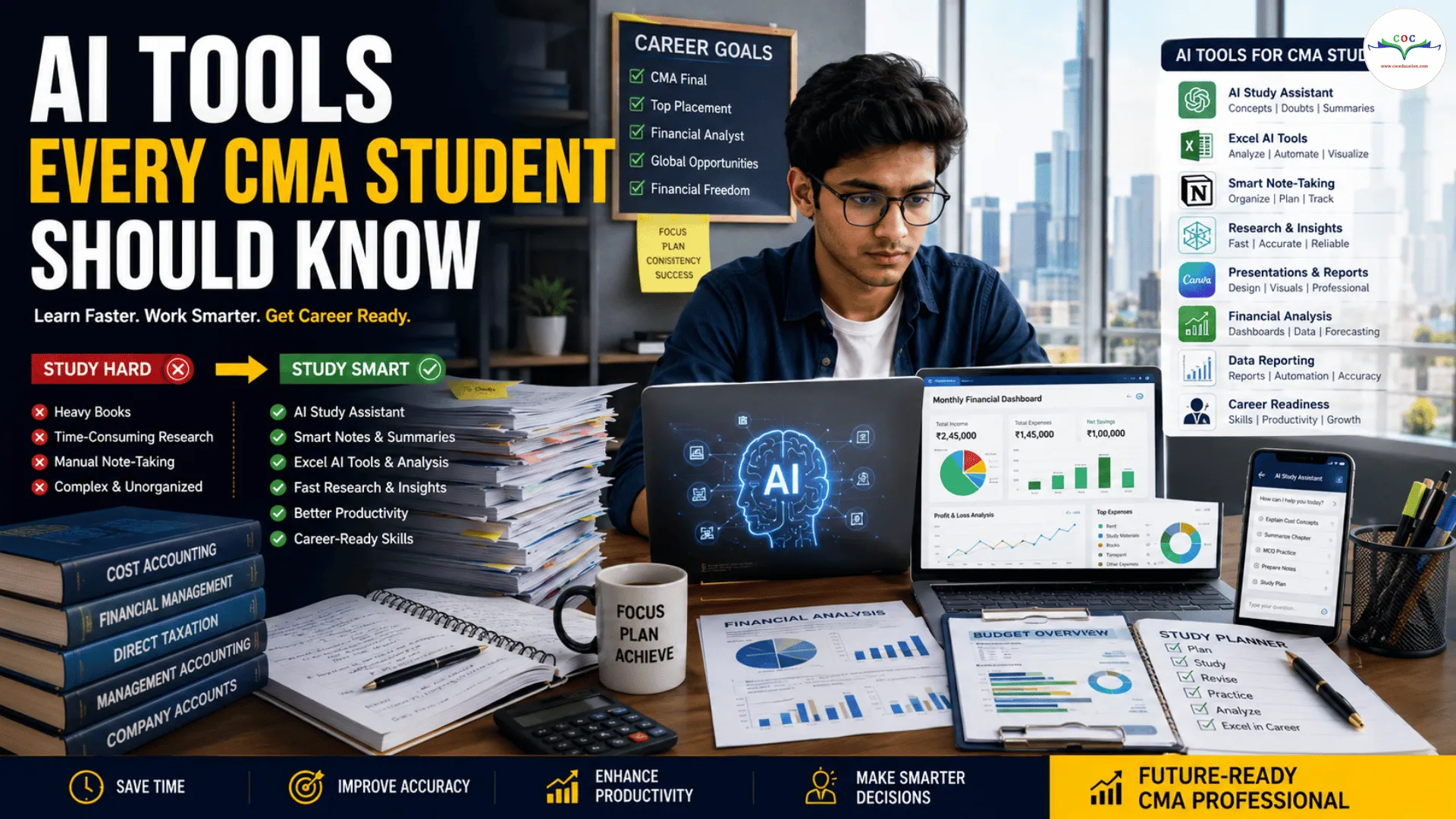
AI is becoming increasingly relevant in accounting, finance, analytics, and business.
Students should learn how to use AI tools for research, data analysis, content creation, productivity, and learning, while also understanding the importance of checking AI-generated information.
Why Should Commerce Students Learn These Skills?
A degree provides academic knowledge, while practical skills help students understand how that knowledge is applied in the workplace.
For example:
Accounting Knowledge + Excel + Accounting Software = Practical Accounting Skills
Finance Knowledge + Data Analytics + Financial Modelling = Practical Finance Skills
Building this combination can help students become more confident and career-ready before graduation.
Final Takeaway
Graduation is not just about completing your syllabus. It is also an opportunity to build skills that can prepare you for the professional world.
Focus on Excel, financial analysis, accounting software, data analytics, communication, financial modelling, taxation, business awareness, problem-solving, and AI skills.
The earlier you start developing these skills, the better prepared you can be for opportunities in accounting, finance, taxation, banking, business, and data analytics.