

How to Prepare for Campus Placements
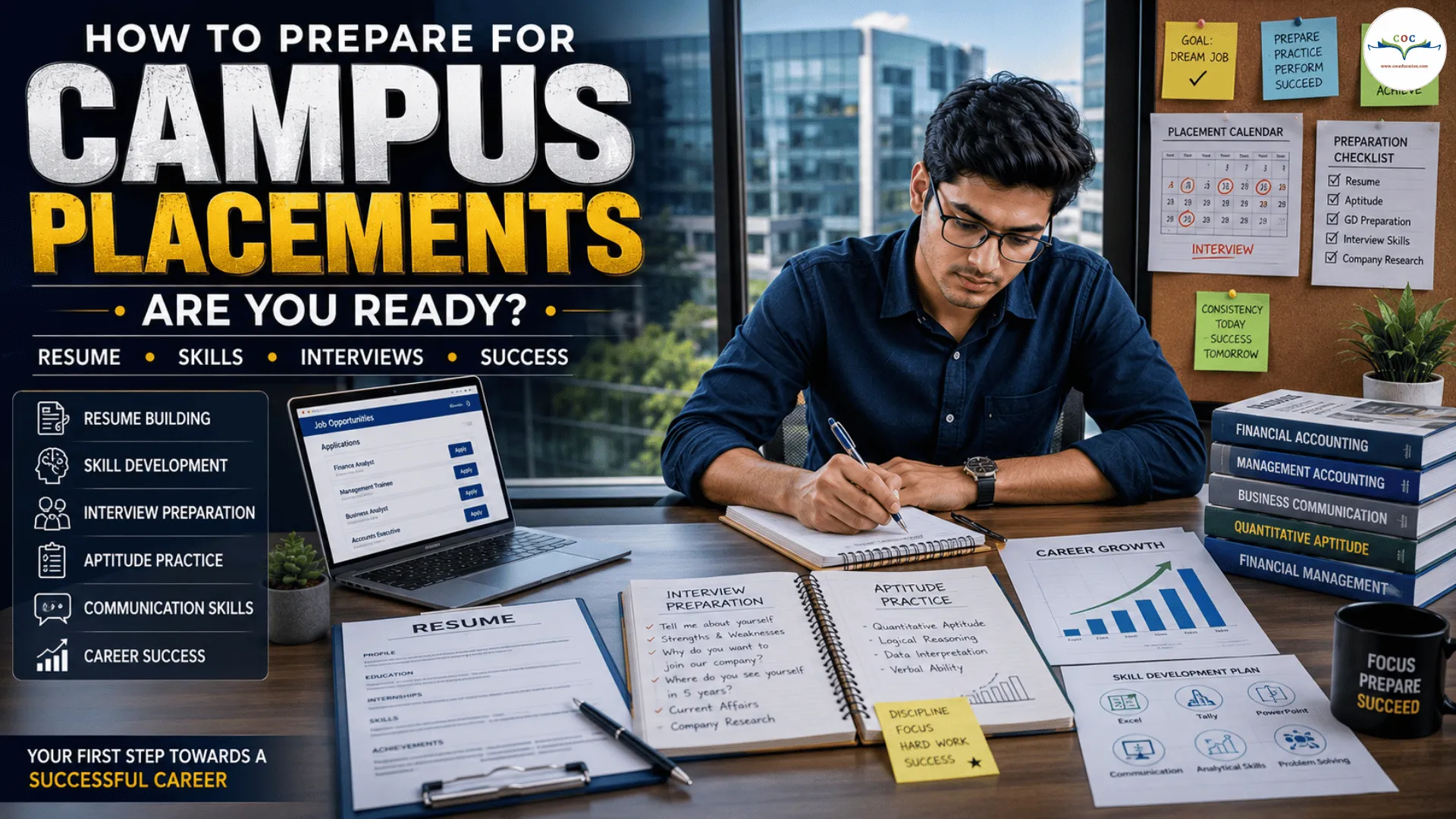
How to Prepare for Campus Placements
Campus placements are one of the most exciting opportunities for students. They provide a direct pathway from college to a professional career and often become the first step toward long-term success.
However, many students start preparing only a few weeks before placement season begins. The truth is that successful placement preparation requires consistent effort, skill development, and confidence-building over time.
If you're a CMA, CA, B.Com, BBA, or commerce student, this guide will help you prepare effectively for campus placements and improve your chances of securing a good job offer.
Why Campus Placements Matter
Campus placements allow students to start their careers with reputed companies immediately after graduation or professional qualification.
Benefits include:
Early career opportunities
Exposure to corporate culture
Financial independence
Professional networking
Faster career growth
The better prepared you are, the more opportunities you can convert into job offers.
Understand the Placement Process
Most campus placement drives follow a similar structure:
1. Aptitude Test
Companies often assess:
Quantitative aptitude
Logical reasoning
Data interpretation
Verbal ability
Strong aptitude skills can significantly improve your chances of clearing the first round.
2. Group Discussion (GD)
Many organizations evaluate:
Communication skills
Confidence
Leadership qualities
Teamwork abilities
3. Technical Interview
For commerce and finance students, interviewers may ask questions related to:
Accounting
Taxation
Costing
Financial Management
Auditing
Excel
Current Business News
4. HR Interview
The HR round focuses on:
Personality
Career goals
Strengths and weaknesses
Communication skills
Cultural fit
Understanding these stages helps you prepare strategically.
Build a Strong Resume
Your resume creates the first impression.
Include:
Educational qualifications
Certifications
Internships
Projects
Technical skills
Achievements
Leadership roles
Volunteer experience
Avoid:
Long paragraphs
Unnecessary personal details
Spelling mistakes
False information
Keep your resume professional, clean, and easy to read.
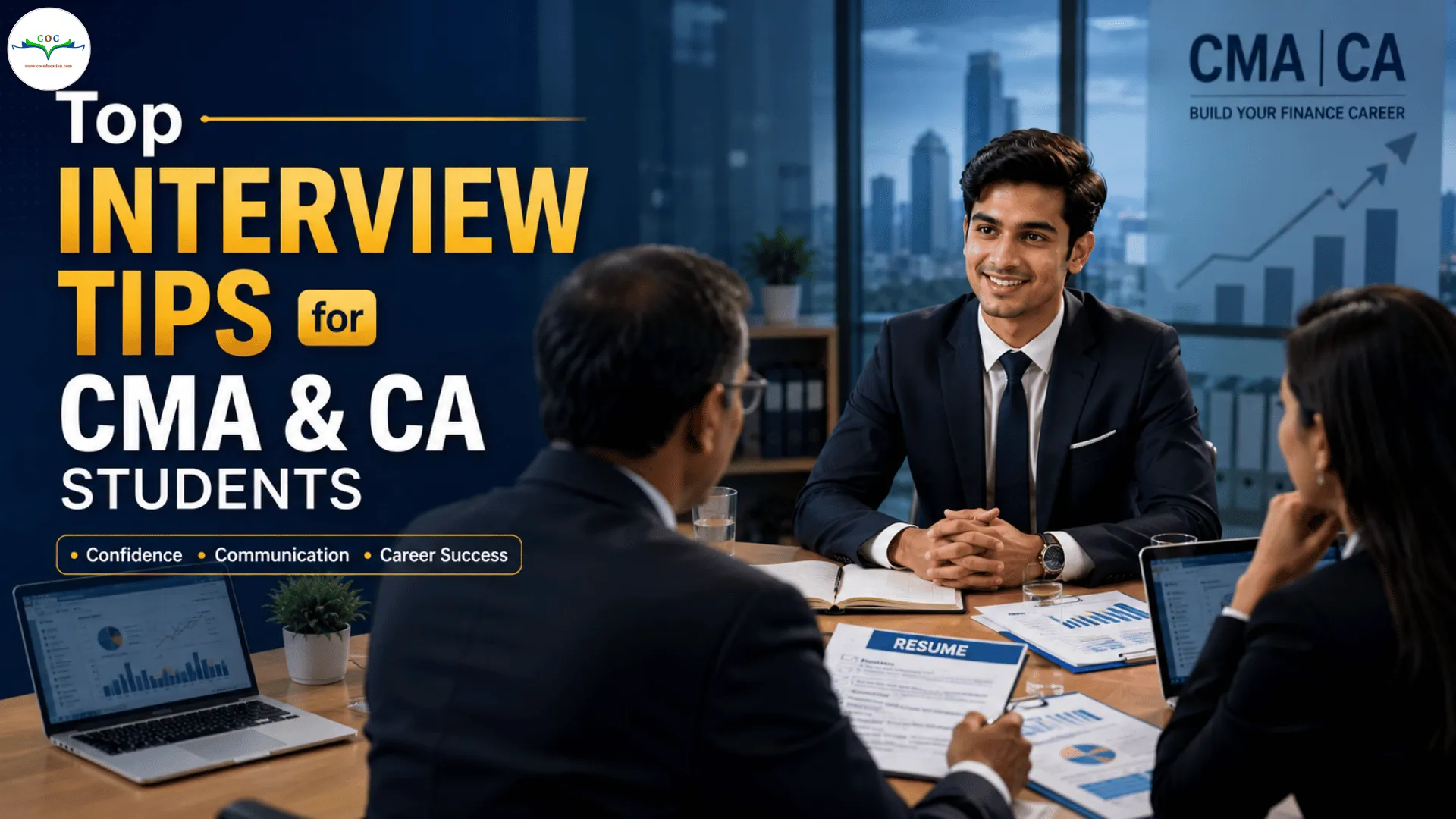
Improve Your Communication Skills
Many students lose opportunities not because they lack knowledge, but because they struggle to communicate effectively.
Ways to Improve:
Read business news daily
Practice speaking in English
Participate in discussions
Record and review mock interviews
Improve body language and presentation skills
Clear communication creates confidence during interviews.
Learn Practical Skills
Employers increasingly prefer candidates who possess practical workplace skills.
Essential Skills for Commerce Students
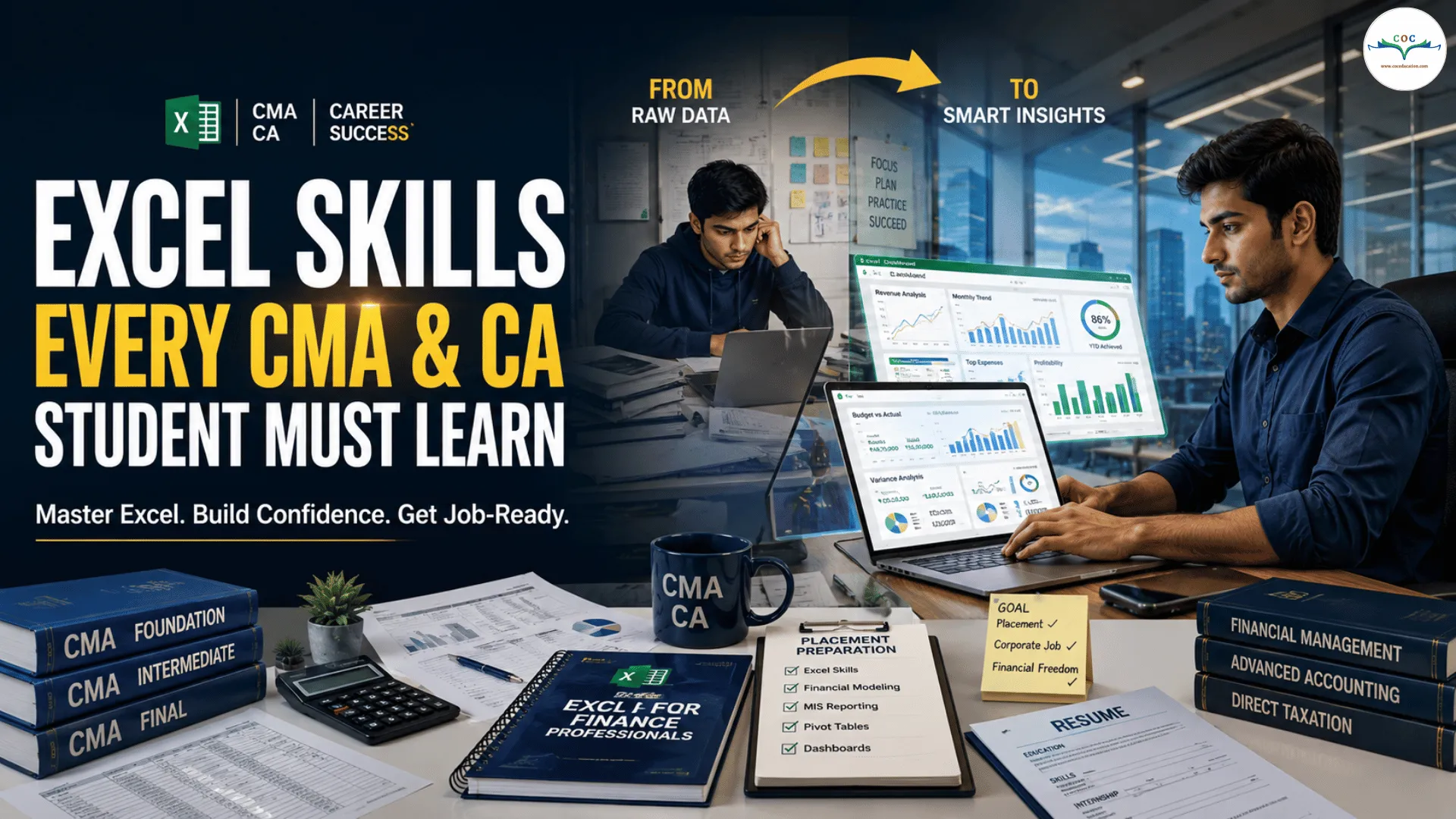
Microsoft Excel
Learn:
Pivot Tables
VLOOKUP/XLOOKUP
IF Functions
Data Analysis
Charts and Dashboards
Accounting Software
Basic knowledge of:
Tally
ERP Systems
Accounting Applications
Financial Analysis
Understand:
Financial Statements
Ratio Analysis
Budgeting
Forecasting
Practical skills help you stand out from other candidates.
Prepare Common Interview Questions
Practice answering questions such as:
Tell me about yourself.
Why should we hire you?
What are your strengths and weaknesses?
Why do you want to join our company?
Where do you see yourself in five years?
What are your career goals?
Well-structured answers improve confidence and leave a positive impression.
Stay Updated with Current Affairs
Interviewers often ask about:
Economic developments
Budget announcements
GST updates
Financial news
Business trends
Spend at least 15–20 minutes daily reading business and finance news.
Gain Practical Experience
Internships provide valuable exposure and strengthen your profile.
Benefits include:
Real-world business understanding
Better interview discussions
Professional networking
Improved confidence
Even short internships can make a significant difference during placements.
Develop Professional Confidence
Confidence is not about knowing everything.
It comes from preparation.
You can build confidence by:
Practicing mock interviews
Improving communication skills
Learning practical tools
Revising academic concepts
Participating in group discussions
The more prepared you are, the more confident you become.
Common Mistakes Students Should Avoid
Lack of Preparation
Waiting until the last minute reduces your chances of success.
Poor Communication
Strong knowledge alone is not enough.
Weak Resume
A poorly designed resume can reduce interview opportunities.
Ignoring Practical Skills
Companies value workplace-ready candidates.
Not Researching the Company
Always learn about the company's business, services, and culture before attending an interview.
Final Thoughts
Campus placements are not just about getting a job—they are about starting your professional journey on the right path.
Students who combine academic knowledge, practical skills, communication abilities, and consistent preparation often perform significantly better during placement season.
Start early, practice regularly, and focus on continuous improvement.